Why Chip-Level Micro-Soldering is the True Fix for Modern Dead Smartphones
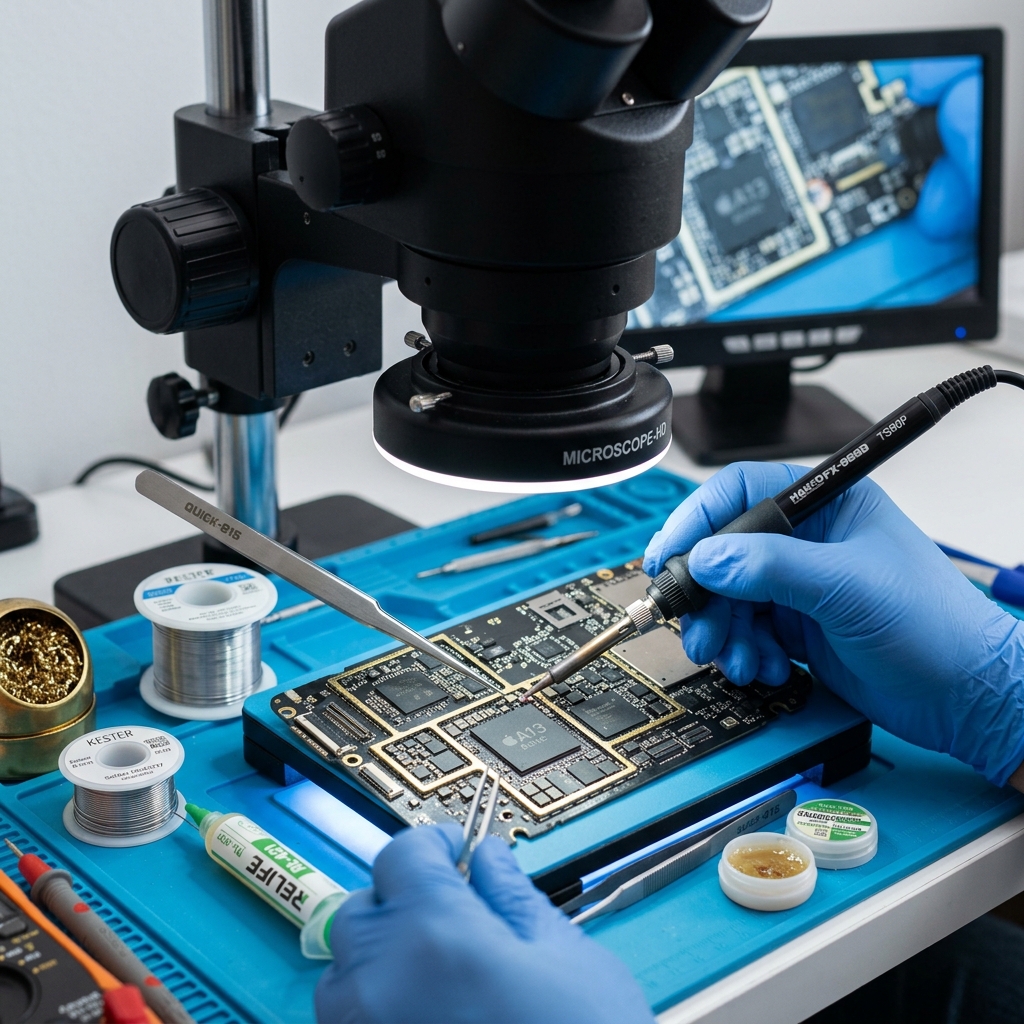
When a high-end smartphone goes black and refuses to turn on, standard manufacturer service centers often declare it 'unfixable' and suggest replacing the entire motherboard. Here is how our Mobicare laboratory micro-technicians use chip-level diagnostic testing to isolate micro-component failures and salvage dead logic boards.
1. Diagnosing Short Circuits on the VDD Main Line
The primary power rail of a phone distributes voltage to hundreds of tiny capacitors and filters. If even a single ceramic capacitor cracks and shorts to the ground plane, the device will pull excessive current and shut down to prevent chip thermal overload. Using thermal cameras and digital multimeters, our technicians isolate the failing micro-component on the schematic map.
2. Reballing the Power IC and CPU
Extreme heat or drops can fracture the microscopic solder ball connections underneath heavy BGA integrated circuits (IC), leading to dead audio lines or baseband failures. We perform hot-air chip desoldering, cleanup, stencil reballing using leaded solder paste, and high-precision SMD refitting to restore logic board continuity.
3. Tracing Data Lines Under a Microscope
Water ingress corrodes delicate copper copper traces carrying data signals to the LCD screen or touch module. Using microscopic enameled copper jumpers (0.02mm thin), technicians bridge broken traces under high magnification, saving your precious device photos and contacts from loss.